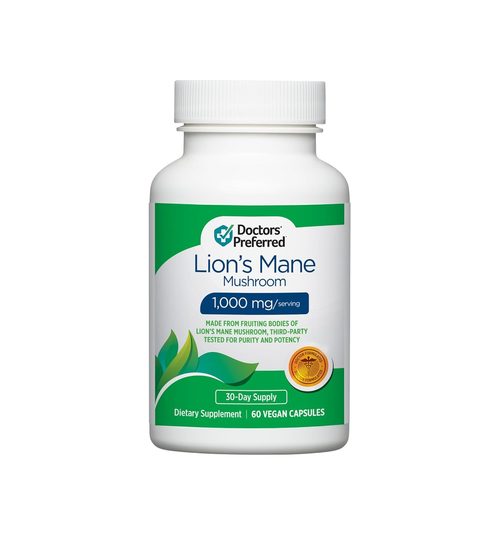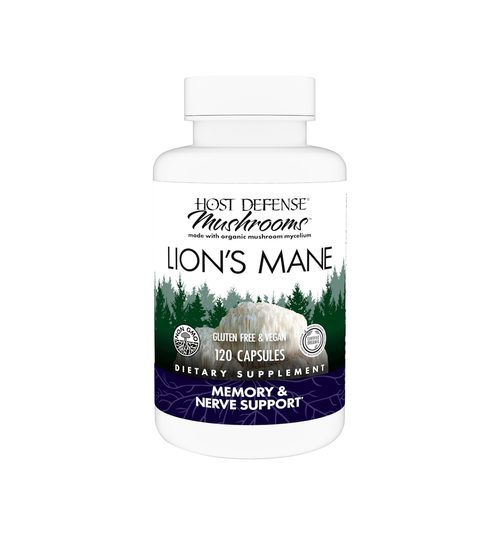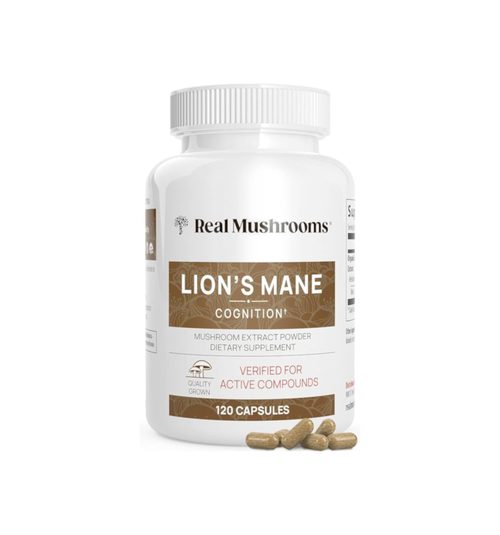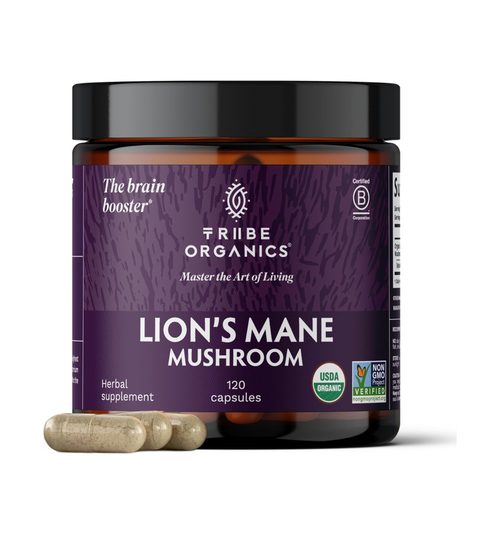
Lion's Mane shows up on almost every "best nootropics" list, usually described in the same few words: memory, focus, nerve growth factor. Those words are doing a lot of work, so it's worth slowing down and looking at what's actually behind them before you buy a bottle.
What Is Lion's Mane?
Lion's Mane (Hericium erinaceus) is a shaggy white mushroom, native to North America, Europe, and Asia, that's been eaten and used in Chinese and Japanese herbal traditions for centuries. In the wild it grows on hardwood trees and looks more like a cascading pom-pom than a typical mushroom cap and stem.
Modern interest centers on two groups of compounds it produces: hericenones (in the fruiting body) and erinacines (mainly in the mycelium, the root-like network mushrooms grow from). Researchers are studying both for a possible role in nerve growth factor (NGF) activity — a protein involved in maintaining and repairing nerve cells — which is the basis for Lion's Mane's reputation as a memory and focus supplement.
What the Research Actually Looks At
It's worth being precise here: most of the human research on Lion's Mane is small, short, and focused on specific populations (older adults with mild cognitive concerns, for example), while a lot of the mechanistic work on NGF comes from animal and lab studies. That doesn't mean the interest is unfounded — it means the evidence is still early, and results in a lab dish or a mouse don't automatically translate to a daily capsule doing the same thing in a healthy adult. Treat strong claims about Lion's Mane "regrowing brain cells" with the same skepticism you'd apply to any supplement marketing.
How Much to Take, and When
Capsule products typically range from 500mg to 2,000mg a day, often split with meals rather than taken all at once. There's no single agreed-upon dose, and — this is the important part — extract strength varies a lot by brand and by whether the product is made from fruiting body, mycelium, or a blend of both. A 1,000mg dose from one brand isn't necessarily equivalent to 1,000mg from another, so the label's suggested serving is a more reliable guide than comparing raw milligram counts across products.
What to Look For When Buying
A few things are worth checking before you pick a bottle:
- Fruiting body vs. mycelium. Some buyers prefer fruiting-body extracts, on the theory that the compounds of interest are more concentrated there; mycelium-based products are often grown on a grain substrate, so check whether the label specifies what's actually in the capsule.
- Extraction vs. whole powder. An "extract" concentrates specific compounds; a plain powdered mushroom does not. Neither is automatically better, but they're not interchangeable, and the label should say which one you're getting.
- Certifications. Organic, Non-GMO Project Verified, and third-party testing are all signals about how a product is grown and processed, not about whether it "works," but they're reasonable tie-breakers between otherwise similar options.
- Format. Capsules, powders, and extract-in-capsule are all available — the right one mostly comes down to convenience and whether you want to mix it into food or drink.
Who Should Be Careful
Lion's Mane is generally well tolerated. The clearest reason to avoid it is a mushroom allergy. Beyond that, check with a doctor before combining it with other supplements or medications, particularly if you're managing a chronic condition — the same general caution that applies to starting any new supplement.
Below are four Lion's Mane products currently listed on HighIQ Nootropics, each taking a different approach to format, sourcing, and certification — worth comparing side by side rather than picking on brand recognition alone.